This page presents additions to the online MIT Media Lab application. It includes a overview of 2 applications/projects:
- MoodMonk: A simple Android mood moderation application
- QuaLife – Gaming Bipolar: A game dashboard to support healthy relational dynamics for bipolar subjects
MoodMonk
- MoodMonk: A simple mobile application to help users moderate mood through:
- increased awareness of current mood
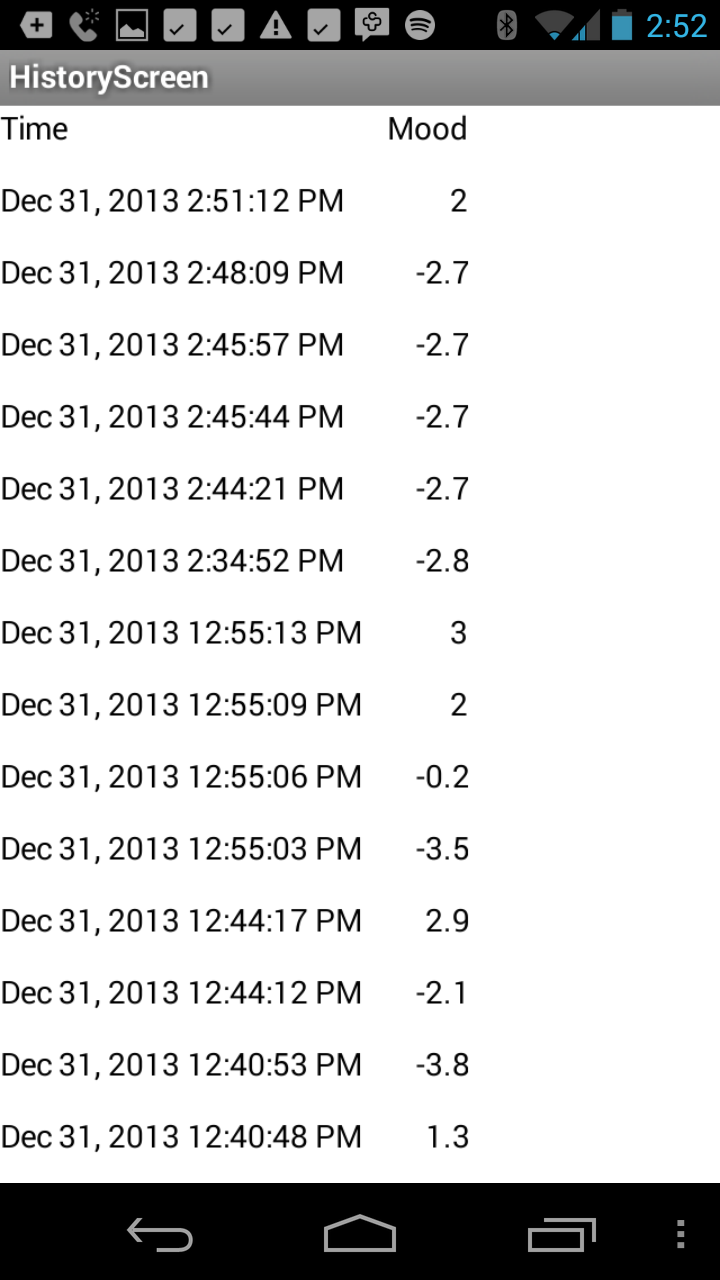
- historical view of recent mood reporting
- Users open the application, select a mood score to indicate their current mood and submit the entry.
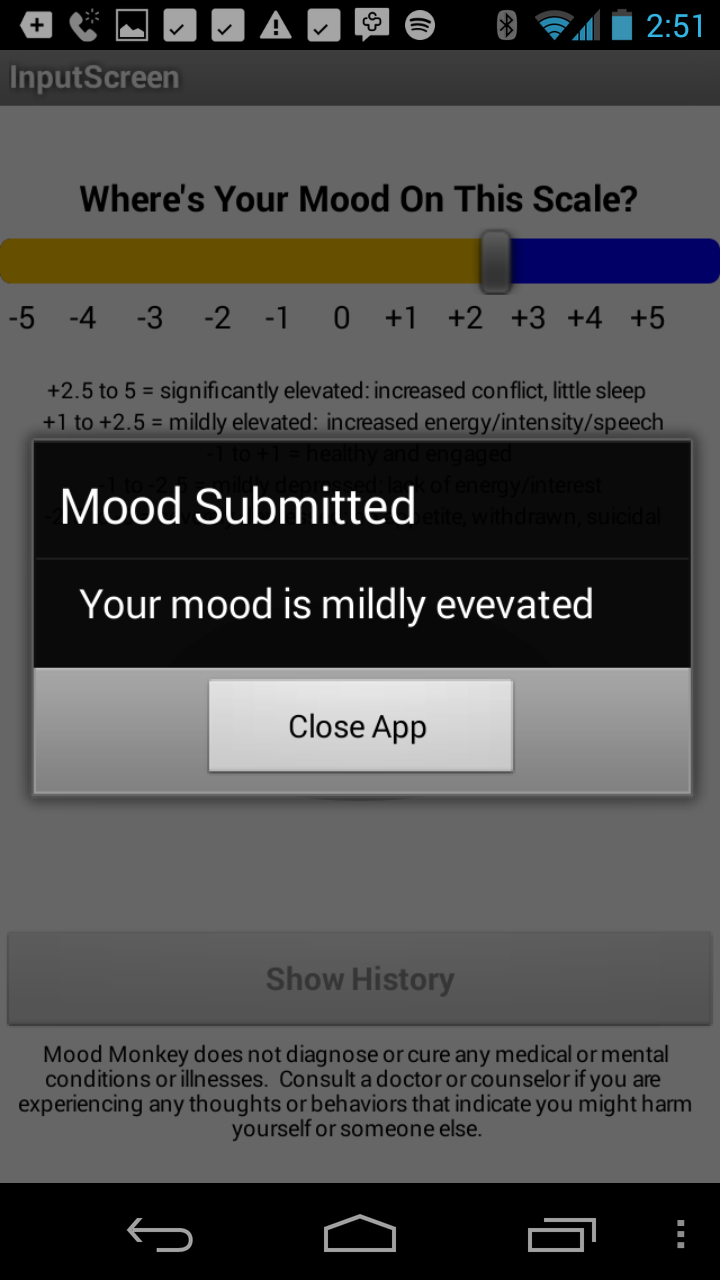
- The user is provided immediate feedback on current mood
- The user can also view history to see how their mood is trending
- Use over time may allow users to adapt their moods by becoming more aware
- MoodMonk was developed with no application development experience.
- It demonstrates the ability to build something using technology with which there was no prior exposure
- The application was built using MIT AppInventor2 and TinyDB; future versions would be built with ADT/Eclipse and an web hosted relational database.
- The current version is very simple: mood capture, feedback, history of mood over time
- Future MoodMonk iterations may include: Physical Location (Home, Work, etc), Travel/Movement, automated application launch, Sleep/Diet, FitBit/Up integration. Data would be aggregated and used to inform users of influencing mood factors and guide actions/behavior to improve mood outcomes. Some examples are:
- “Your job appears to be killing you”
- “Your sleep schedule may be affecting your mood”
- “You’re healthier when you leave work by 6pm”
- “You experience a better mood when you eat lunch”
- Etc.
MoodMonk screenshots:
-
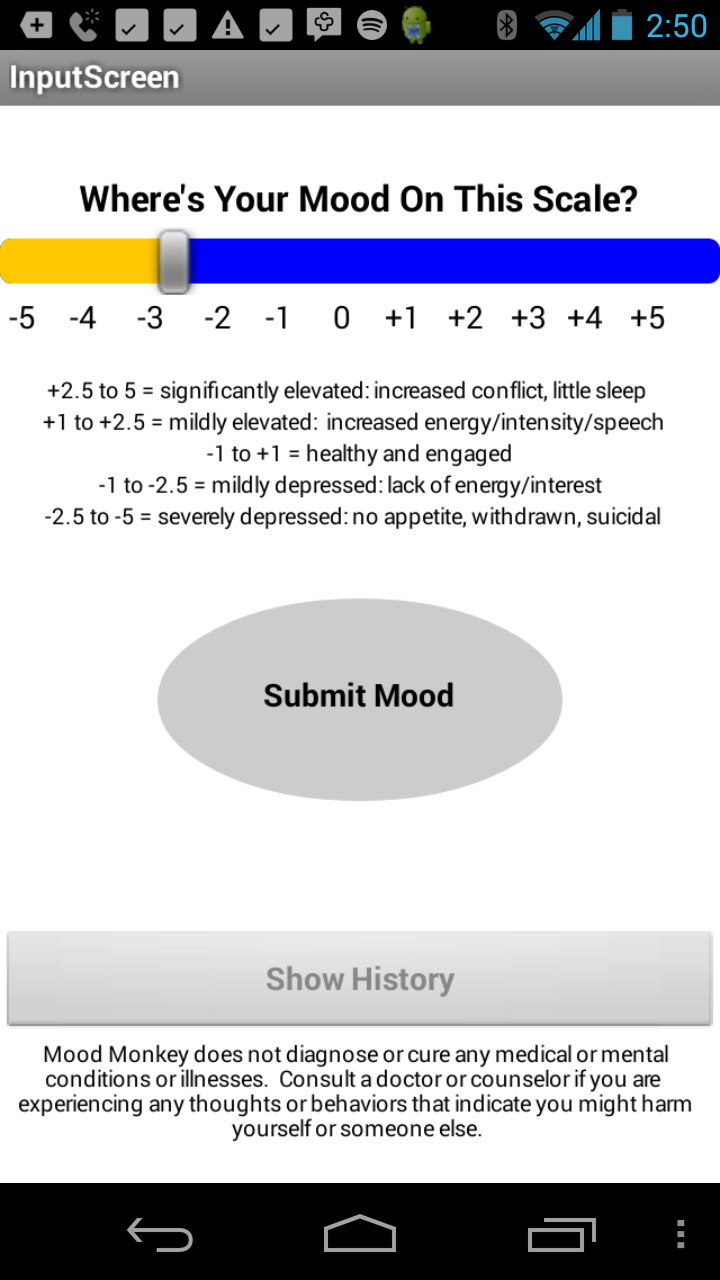
- A single screen with a simple slider
-
- Quick, simple user mood feedback
-
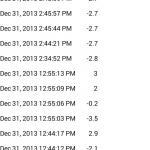
- See mood trends over time
QuaLife – Gaming Bipolar
- A gaming dashboard to display relational impacts/group health for groups with members who are diagnosed or under evaluation for Bipolar or PTSD.
- Applications extend to normal family dynamics (As normal as any family can be).
- Dashboard integrates data from FitBit/Up type devices, Sensormatic type devices, Mobile accelerometers. It provides views into individuals, dyad relationship pairs and groups to reveal patterns of mood/behavior.
- The dashboard guides game participants to produce winning scores/earn badges to produce optimal individual, dyad and/or group scores.
- It is both and individual and team sport that puts all group members on the same team.
Qualife Screenshots (Mock-up Prototype Wireframes)
QuaLife – Individual Dashboard View
The Individual Dashboard View provides a game participant with:
- Visibility into key metrics indicating physical and social wellness
- Insight on the influence they have on other game participants
- Suggested Adjustments to improve game scores and relational dynamics
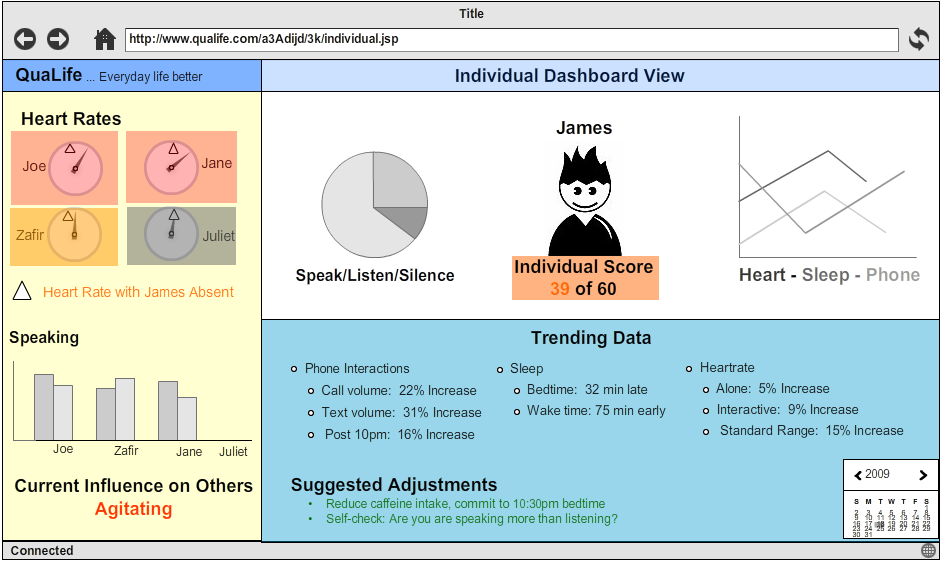
View Individual Participant metrics and their influence on other game players
QuaLife – Dyad Dashboard View
The Dyad Dashboard View provides a game participant with visibility:
- How relationships scoring is driven
- How others contribute in relationships to them
- How they influence their relationships
- Scoring by individual relationships
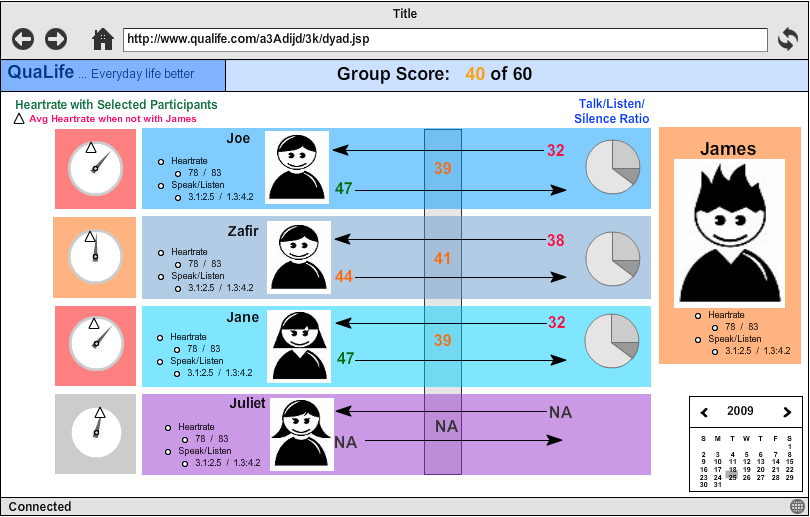
A view into relationships with specific individuals
QuaLife – Group Dynamic Dashboard View
The Group Dynamic Dashboard View provides game participants with visibility to:
- Cross group view of relationship dynamics
- Color coded grading of individuals within the group
- Engagement and influence across the group
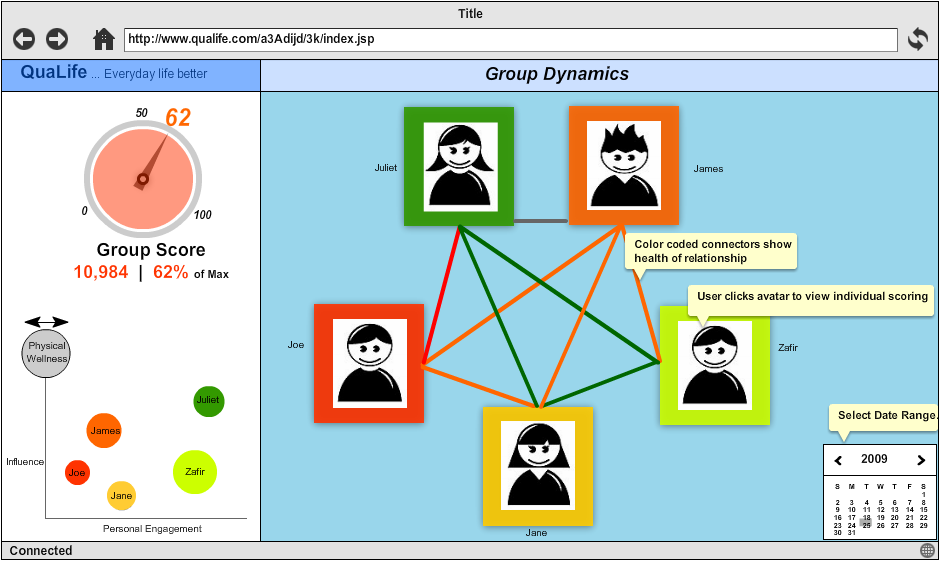
View the dynamic across a nuclear group
A mobile app provides CBT type interventions via push notification. The app may create awareness by offering alerts, providing suggestions and offering validation of successes. A mobile app may also include key metrics and game scoring for the participant.
QuaLife – Mobile Support Notifications
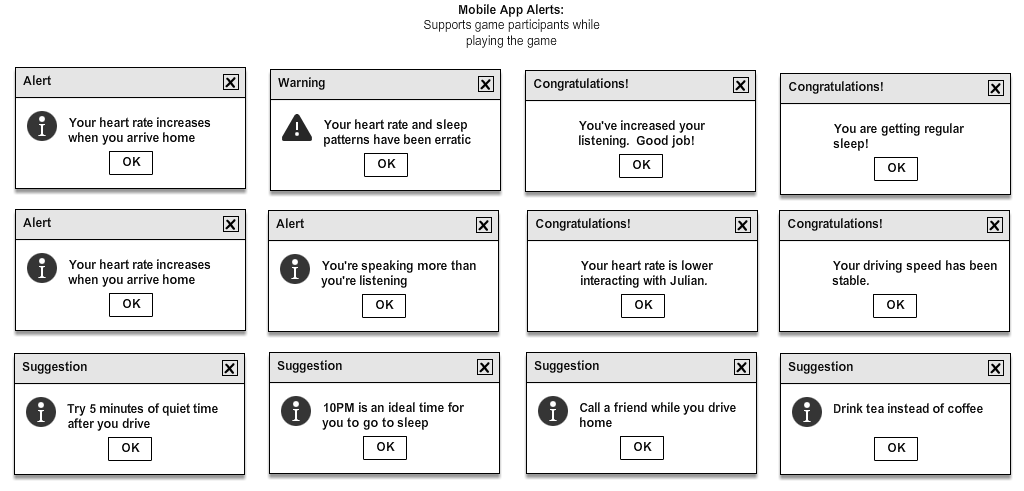
Game participants receive push notifications to support their gaming